Drafted by Harry Benford, June 24, 1998. Revised March 30, 2000
Based on earlier work by Robert M. Scher and Luis Garza-Rios
NA&ME Photo Gallery: A gallery containing old pictures of Naval Architecture & Marine Engineering as well as the College of Engineering.
Preamble:
What follows is an attempt to review the principal events in the history of the University of Michigan’s Department of Naval Architecture & Marine Engineering. Space constraints have forced us to omit many details, including names of individuals whose roles in the department have been thoroughly appreciated, and yet judged to be marginal to the total picture. We have also omitted the names of several talented and highly motivated secretaries and others in staff positions. Time constraints have for the time being kept us from thoroughly researching the dates of several major events. The reader is advised to use the detailed accounts with caution until we can establish the details with more
The Spark: Mortimer E. Cooley
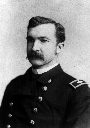 Our educational program in naval architecture & marine engineering had its roots in an 1879 act of Congress, which authorized the U. S. Navy to assign a few officers to engineering colleges around the country. Mortimer E. Cooley, an 1878 Naval Academy graduate, voiced an interest and was accordingly sent to the University of Michigan to teach “steam engineering and iron shipbuilding.” Upon his arrival he was one of but four professors of engineering at the University, at that time a department within the College of Literature, Science, and the Arts.
Despite his distinguished academic career, Cooley held no formal academic degree until the Naval Academy retroactively granted all its graduates bachelor’s degrees; but that was only after he had retired. Cooley always stressed the importance of balancing theory and practice in education, and often referred to himself as a “scientific blacksmith.”
Cooley’s arrival in Ann Arbor came in the midst of a period of rapid change in maritime technology. Steam was replacing sail, screw propellers were replacing paddle wheels, steel was replacing wrought iron, and electricity was finding a role in shipboard illumination. Naval architecture itself was taking a scientific turn in England with the advent of Froude’s ship model basin. This was also at a time when engineering education was under rapid development, and Cooley found himself at the center of the University’s physical and intellectual expansion in the engineering disciplines. In addition to his teaching duties, Cooley supervised the construction of the first engineering laboratory building, which included a foundry, a forge, and machine shops.
Cooley’s energy and personal qualities soon placed him in a position of leadership on the campus, and in 1885 he resigned his commission to become a permanent member of the faculty. He envisioned a growing need for properly educated engineers in the marine field. This led him in 1898 to take his ideas to the University’s Regents, but he placed his plans on hold while serving on shipboard during the Spanish-American War. Upon his return, in 1899, the Regents appropriated $2000 to establish a curriculum in naval architecture and marine engineering. Cooley was told to find a professor of naval architecture while he himself was to continue teaching marine engineering.
Cooley’s search for a suitable professor coincided with his responsibility for designing a major new building to house engineering classrooms, offices, and laboratories. With an eye to attracting the best possible academician to teach naval architecture, Cooley integrated into the foundation of the new building a large model basin for scientific testing and development of ships’ hull forms. (Cooley’s edifice, which still stands today, was known during most of its life as the West Engineering Building.)
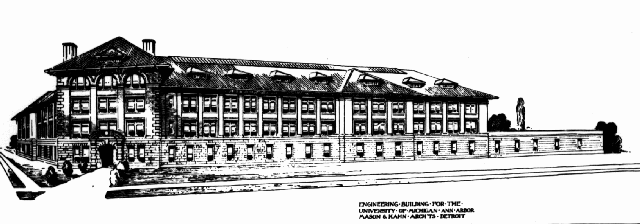
View of the West Engineering Building as it appeared when opened in 1904. Note that the model basin, then 300-ft long, stretched well beyond the rest of the building. In 1908 the basin’s structure was extended by 60 feet, and the building itself was also lengthened to enclose the basin. Initially, however, the 60-ft increment was blocked off and “temporarily” floored over for use as an electrical engineering lab. It remained that way until 1948, when the electrical lab was moved across the street. The tank was pumped dry, the “temporary” wall removed, the tracks extended, and the tank re-filled. Only then was it discovered that the “new” concrete would not hold water, so the tank had to be emptied once more to allow repairs.
The Sadler Years
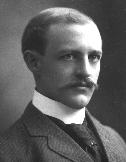 But, where to find candidates for that professorial position? On these shores there were in those days only two other engineering institutions teaching naval architecture: MIT and Webb Institute, and they, like Michigan, were still in their earliest stages of development. Great Britain was the logical place to look. In earlier years some of Cooley’s naval friends had been sent to the University of Glasgow to study naval architecture and had returned with glowing reports of young Herbert C. Sadler. He was an assistant professor under the distinguished Sir John Biles, who held the chair in naval architecture at that venerable institution. Cooley offered Sadler an annual salary of $2000 (about twice what Glasgow had been paying) and the tempting prospect of completing and exploiting the model basin. Sadler readily accepted and arrived on campus in 1900, ready to make our educational program “second to none in the United States.” Soon thereafter he and Cooley established the Department of Naval Architecture and Marine Engineering, with Sadler as Chairman.
Armed with findings from his newly commissioned model basin, Sadler soon became a world leader in scientific naval architecture. Along with George Baker of England, and Admiral David W. Taylor, Cooley ranked as one of the top scientist/engineers in the profession. His contributions to the literature were impressive and those just in the Transactions of SNAME occupy more than a page of the Index . His talents were also applied to actual ship designs; in collaboration with Frank Kirby, Sadler designed some of the finest passenger ships on the Great Lakes.
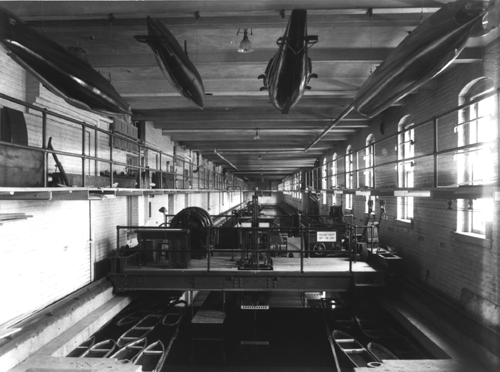
The model basin with Sadler-designed carriage and instrumentation. The models hung overhead are from a series of tests on foreign submarines run for the U.S. Navy . The models in the water were made of paraffin and were kept submerged so as to hold their shape. Most models today are made of wood.
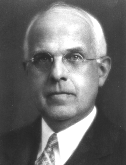 Between them, Cooley and Sadler taught all the courses in the maritime program; but Cooley’s increasing administrative duties left little time for his courses in marine engineering. This led them in 1903 to add Edward M. Bragg to the department. Bragg, having graduated from MIT in 1896, had obtained practical shipyard experience before coming to Michigan. In addition to teaching marine engineering, Bragg carried out admirable work in the model basin and established a reputation for research in wake distribution and propeller design. He also became one of the country’s leading authorities on the design of reciprocating steam engines.
A versatile engineer, Bragg published papers on a wide range of topics over a period of three
A year after Bragg’s arrival, Cooley took over leadership of all engineering activities, which attained college status in 1915 with Cooley as dean. He held that position with enormous success until he retired in 1928. Under Cooley’s energetic leadership the College progressively developed into one of the best in the nation. Upon Cooley’s retirement Sadler took over as dean, but he was dogged by ill-health, and retired in 1937.
About the time of Bragg’s arrival the students in the department spontaneously formed the “Indoor Yacht Club.” Within a couple of years, however, they assumed a more dignified self-image and changed the name to the Quarterdeck Society. As such they encouraged professional development through student-generated papers. Being situated in a small department, Quarterdeck served as both a professional society and an honor society. As an honor society it came under criticism for its relatively low grade point requirement, but could boast that it was perhaps the only honor society on campus that was providing a useful service. In the mid-50’s, after decades of independence, Quarterdeck agreed to become affiliated with the Society of Naval Architects & Marine Engineers, but nevertheless to this day maintains its own identity.
An example of the pioneering teamwork provided by Cooley and Sadler came in 1914 with the offering of aeronautical engineering courses, following Sadler’s organization of the UM Aero Club in 1911. By 1916 a complete four-year aeronautical degree program was offered within the renamed department of Naval Architecture, Marine Engineering and Aeronautics. Aeronautics remained an option within the department until 1926.
During World War I Sadler served as naval architect for the U.S. Shipping Board as our nation struggled to overcome the onslaughts of German submarines.
Cap Baier’s Years
 In 1918 a third member joined the department: Anders F. Lindblad, a graduate of Chalmers University (Sweden) with shipyard experience and a particular interest in Great Lakes operations. His publications included perhaps the very first comprehensive analysis of transport economics in Great Lakes ships. In 1933 he left to take the chair of naval architecture at his alma mater, in Gothenburg. He was succeeded by Louis A. Baier, who quickly took over the management of the model basin. Baier was one of our own graduates who had acquired considerable practical ship design and operating experience. He became a widely known consultant, particularly in hull form and propeller design. In 1944, on Bragg’s retirement, Baier took over as chairman and held that position until his own retirement in 1958.
Louis A. Baier, better known as “Cap,” was seldom without his pipe and a salty yarn.
In 1928 Henry C. Adams II joined the department as an assistant professor after several years of experience in ship design, including consultancy to the Load Line Commission. He was notable in being the first UM alumnus on the faculty, and became well known for his expertise in safety at sea, notably in matters of structural strength and damaged stability. He also became well known for insisting that his students take a professional attitude toward their academic assignments. Adams retired in 1961.
The 1930’s was a period of little shipbuilding activity in the United States. As a result, job opportunities in the marine field were almost non-existent. Enrollments fell off precipitously and the administration might have been tempted to eliminate the department. Perhaps the fact that the model basin remained a dominant feature of the physical plant was the determining factor in the department’s survival. By the late 1930’s unsettled world conditions made the advent of World War II all too likely. As a result shipbuilding began to revive and employment opportunities for naval architects and marine engineers quickly became plentiful. Since that time, although the demand has fluctuated, our students have invariably been able to find suitable professional employment upon graduation.
During World War II the University was heavily engaged in accelerated educational efforts and military research. Our department was no exception. The model basin was used to help develop floating dry docks, amphibious vehicles, and other small military craft. Baier served as a consultant to the War Department and to the Navy’s Bureau of Yards and Docks. All three regular members of the Department’s faculty (Bragg, Baier, and Adams) helped push large classes of students through telescoped educational programs leading to bachelor’s degrees in three years instead of four. In 1946 the Navy transferred the Reserve Officers Naval Architecture Group (RONAG) from Annapolis to Ann Arbor. In due time that activity turned out 227 officers for Construction Corps duty.
The faculty at that time was augmented by C. Willett Spooner from the Department of Mechanical Engineering. Spooner became the department’s marine engineer upon Bragg’s retirement in 1944 and held that position until the late fifties, when he resigned to take a position in industry. In 1948 Harry Benford came in as an assistant professor charged with teaching the beginning course and assisting with the senior designs. He had graduated from Michigan in 1940 and then worked in various capacities at the Newport News shipyard. When he joined the faculty, there were just four on the academic team (Baier, Adams, Spooner, and Benford), one half-time secretary, and one model maker. There were large numbers of students. Many of them were receiving financial support from a federal program benefiting veterans of the war, the “GI Bill.” The majority of them were married and living near Ypsilanti in exceedingly austere “temporary” houses that had been thrown together to house workers employed in the Ford Bomber plant, a major war-time factory in nearby Willow Run. Only a minority were interested in education beyond the bachelor’s degree, and going beyond the Master’s level was essentially unheard of. A mature and dedicated group, they seldom found enough time for family affairs, which led their wives to boost morale by forming the Seaweed Widows Club, which became an adjunct to the Quarterdeck Society and helped in such ways as providing decorations for departmental banquets.
Audrey Muller was the first female graduate of the Department of Naval Architecture and Marine Engineering at Michigan. She graduated in 1949 and went on to work for Bethlehem Steel Company’s Fore River (later Quincy), MA shipyard.
In trying to rationalize the ship design process, Benford discarded traditional approaches in favor of applied economics. He published his pioneering paper on the subject in 1956, and became best known for his long-continuing work in that field.
The decade following the war was a period of rapid change in marine technology, principally in the design and construction of ships for the bulk trades. World trade was in a period of rapid growth, particularly in raw materials. Ore carriers, and more particularly tankers, were experiencing a twenty-fold increase in deadweight capacity. In the liner trades, new cargo-handling methods were leading to revolutionary developments in the design of not only ships, but port facilities as well.
In 1957, a still-continuing tradition was started when Benford and two students, Judith Robinson and Paul Van Mater, initiated an alumni reunion coincident with the Annual Meeting of SNAME in New York City. Their New York contact was alumnus Klemme Jones (’49), who was then working at SNAME headquarters. Within two years another alumnus, Lester Rosenblatt (’42), voluntarily took responsibility for organizing the reunions and continued in that role until 1998, when his son, Bruce (’83), volunteered to shoulder the burden.
Transformation Under Richard B. Couch
In 1957, upon Baier’s retirement, Richard B. Couch was induced to leave his position as Chief Naval Architect with the Navy Department’s Bureau of Ships to become Chairman of the UM Department of Naval Architecture and Marine Engineering. He brought with him ambitious plans for improving the scope of the educational program and the capabilities of the model basin. Under his leadership the department put strong emphasis on graduate education. Couch induced the College to invest heavily in a new carriage and sophisticated instrumentation for the model basin, which now took on the more suitable designation as the Ship Hydrodynamics Laboratory. Couch was fortunate in that his arrival coincided with the Soviet Union’s Sputnik I, and with it a renewed national interest in science and engineering, which reflected in generous financial support for our department.
The new emphasis on graduate education led in 1960 to the first Ph.D. degree being awarded by the department. That went to a native of Norway, Finn Michelsen, who stayed on to manage the model basin and help turn out several more Ph.D. graduates in the following years. In 1971 he left to accept the offer of a chair at the Norwegian Technical Høgeschule in Trondheim. That was the start of a still-continuing, fruitful relationship between the sister departments in Trondheim and Ann Arbor.
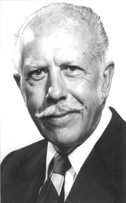 Richard B. Couch led to major advances in graduate level education.
Couch’s modernized Hydro Lab became so much in demand for all manner of commercial testing that at times it had to operate two daily shifts. In addition, a 60- by 100-ft wave and maneuvering basin was constructed with wave making devices supplied as excess items from the Navy’s Taylor Model Basin. This facility was used for a variety of projects including an ambitious series of tests on oil recovery systems carried out for the U.S. Coast Guard. In time, however, the need for the tank diminished, so it was abandoned in the late 1960’s to make room for other needs of the College.
The graduate program attracted such favorable attention that in 1959 the U.S. Coast Guard asked the department to undertake a regular educational program for selected officers, leading generally to masters degrees. Initially the Coast Guard officers numbered about two dozen, i.e., twelve arrived each year for a two-year program. Starting in around 1987, however, at the Coast Guard ‘s request, the numbers were doubled. At the same time the department agreed to assign to each officer a research project under the mentorship of some member of the faculty. In 1998 this organized effort led to the first annual NAME/USCG Conference, an on-campus formal presentation of the individual reports before a public gathering including several senior USCG officers.
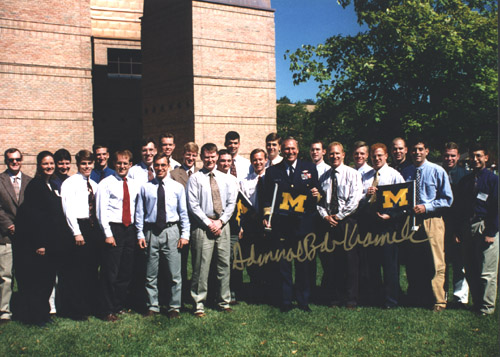
With a sympathetic College administration behind him, Couch was able to expand the department’s activities with an increased faculty roster. Raymond A. Yagle and Amelio D’Arcangelo both came in 1960 with several years of professional experience. Both had expertise in ship structures and Yagle also had interest in preliminary design, offshore engineering, and computers. The versatile Finn Michelsen joined soon thereafter and served for some years as director of the model basin. Sensing the need for additional staff help, Couch brought to an end the era of the half-time secretary and solo model maker.For a period of a few years before Couch arrived on campus a young Englishman named Kenneth Maddocks succeeded Spooner in taking responsibility for the marine engineering courses. The Maritime Administration, noting the Navy’s success in applying nuclear power, had reason to consider its application in merchant ships. That led MarAd to sponsor research at the College’s relatively new Nuclear Engineering Department. Maddocks and Benford were both active in that study and Maddocks became such an expert in nuclear propulsion that in 1956 he was induced to return to England to provide leadership in that country’s atomic energy developments. He was replaced by George West, one of our GI graduates who had been employed at the shipyard in Newport News. West had acquired nuclear expertise at Oak Ridge and had also become the shipyard’s expert on computer-aided design (in the days of the binary numbering system). He thus brought to the campus leadership in two newly developing technologies: nuclear power and computer-aided design. In 1957, when Couch arrived, our department’s faculty consisted of Couch, Adams, West, and Benford.
In 1964 Couch recruited Horst Nowacki for the faculty. Nowacki had just received his Dr.-Ing. degree from the Technical University of Berlin. At first, his major interest was in ship hydrodynamics, but he quickly seized the opportunity to engage in computer-aided design and shortly became a world leader in that subject. He was strongly encouraged in this by Dr. Robert S. Johnson of the Navy Department. Nowacki’s years at Michigan were so noteworthy that in 1974 he was offered a chair at his alma mater in Berlin, which he accepted. He nevertheless retained loyalty to our department and was instrumental in fostering a still-ongoing exchange program involving both students and faculty.
In 1970, while on an accreditation mission, West was killed in an airplane accident. Fortunately, however, a well-qualified replacement was already on hand in the person John B. Woodward III, who was just completing his Ph.D. requirements. A VPI graduate, Woodward had worked at the Newport News yard and, like West, had gone through the nuclear program at Oak Ridge. By the time Woodward took over, applying nuclear power to ship propulsion was proving unlikely except in special military craft. Diesel propulsion, which had long been dominant in merchant ships overseas, was now becoming accepted by U.S.-flag fleets. Woodward wisely developed expertise in that technology and published a widely-read book on the subject. He also published a book on marine gas turbines (translated into Russian and Chinese) and found time to develop an outstanding reputation for his work in computer-aided design. Woodward had the distinction of introducing computer-aided design to our Norwegian sister department in Trondheim.
Benford’s Term
About the time Couch arrived the College changed its policy on tenure for chairmen. Originally, once appointed, chairmen were expected to hold the position until retirement or promotion to higher rank. Since then, however, chairmen have been appointed for limited terms: typically five years with possibility of a second five-year appointment. Thus, in 1967, having led the department for a decade, Couch stepped aside to be replaced by Benford, who agreed to serve for a single five-year term. By that time, much of the earlier glow on technology was beginning to fade. Public support for engineering education waned, and federal funding for research and advanced studies decreased. Shipbuilding in the United States was also at low ebb. Nevertheless, owing to vigorous recruiting efforts, enrollments in the department soared, which justified Benford in bringing in four new tenure track professors: T. Francis Ogilvie (theoretical hydrodynamics), Movses Kaldjian (structural analysis), Robert F. Beck (hydrodynamics and small craft design), and Michael Parsons (best described as a Jack of all trades and master of each). Three of those recruits themselves advanced to the chairmanship in due time.
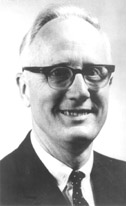 Under Benford’s leadership, the Department greatly experienced increased enrollment.
Ogilvie, who came from the Navy’s Taylor Model Basin in 1967, was a theoretical hydrodynamicist of considerable fame. Kaldjian (whose time was shared with the Civil Engineering Department) had particular competence in structural analysis and became a pioneering authority on finite element techniques. Beck was a hydrodynamicist with a newly-earned Ph.D. from MIT and research experience at the University of Adelaide (Australia), while Parsons came with a newly-earned Ph.D. from Stanford and six years as a naval officer in Rickover’s nuclear propulsion program. William E. Zimmie was also induced to give several series of well attended lectures on the role of the engineer in the business world. Benford stepped aside from the chairmanship in 1972, but continued to teach until his retirement at the end of 1982.
Ogilvie’s Innovations
Ogilvie, who became chairman in 1974, was a vigorous innovator. His most visible act was to move the department physically from the venerable West Engineering Building (now West Hall) on the Central Campus to the North Campus, leaving behind only the model basin and associated facilities. The entire College of Engineering was in the throes of moving department-by-department to the North campus, and our department was scheduled to be the last to go. Ogilvie thought that would leave the department rather isolated and vulnerable, so he determined to find some way to move the schedule ahead. The College was in the midst of a capital campaign, so Ogilvie started his own campaign-within-a-campaign and in so doing arranged to take over what had been the small lab and office building (19,000 sq. ft) for the Physics Department’s two cyclotrons. With strong voluntary support from alumnus Hugh Downer (’39), Ogilvie led a capital campaign to double the size of the building. Major contributors were Jerome Goldman (’44), Ray Pearlson (’49), and Lester Rosenblatt (’42). Many other alumni and friends made contributions, so that Ogilvie was able to provide more than just an enlarged and well-furnished building. He also had funds for new computers and research facilities, and seed money for new research initiatives. In total, Ogilvie and Downer raised $800,000, a significant sum for a small department and, indeed, the largest of any department within the College. The department made the move to the North campus in 1977.
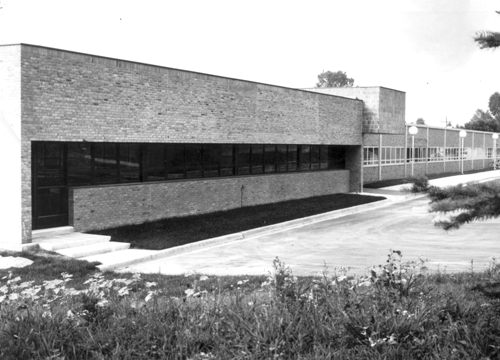
The department’s new home on the North Campus.
In conjunction with the capital campaign, Ogilvie also worked to obtain federal support for a national center for research and testing in naval architecture and marine engineering. The National Science Foundation (NSF) provided funding for a feasibility study, which was carried out by Ogilvie and Vernon A. Phelps, a Research Scientist in the Department. Unfortunately, budget cuts late in the Carter administration eliminated the immediate possibility and the proposal has been deferred indefinitely.
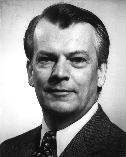 T. Francis Ogilvie, whose chairmanship was marked by vigorous innovation and the move to North
Ogilvie changed the departmental governance during his tenure. From Sadler through Couch the chairmanship was an autocratic position. Benford instituted an executive committee comprising a small group of elected faculty members plus the Commodore of the Quarterdeck Society, ex officio . Ogilvie’s innovation was to make the entire faculty into an executive committee that met every one or two weeks, and that form of governance has continued ever since that time.
Building on the groundwork laid by Michelsen and Nowacki, Ogilvie led an expansion of graduate studies and sponsored research. During this period Kaldjian originated an exceptionally useful input/output technique applicable to finite element analysis. He also found time to lecture extensively overseas, introducing his unique methods at institutions throughout much of western Europe and the Near East.
Beck developed an international reputation for his research in several areas of ship hydrodynamics, including the prediction of hydrodynamic loads on offshore structures. He earned recognition as an excellent teacher and was especially appreciated for his elective courses in small high-performance craft and sailing yacht design.
In a small department each professor must be able to teach a wide variety of subjects, and for this Michael Parsons was especially valued. Since joining our faculty, he has taught courses in marine engineering, dynamics, hydrodynamics, thermodynamics, computer-aided design, nuclear engineering, control systems, environmental factors, and professional ethics. In many of his courses he started from scratch or reorganized the content completely. He has been primarily responsible for the development of our graduate program in marine engineering. At one point he received the Tau Beta Pi award as the “outstanding teacher” of the year in the College of Engineering and has since been honored as a Thurnau Professor (a campus-wide recognition of truly outstanding professors).
Throughout the 1960’s, 70’s and 80’s Yagle was actively engaged in voluntary work on several national committees, principally with the National Academy of Science/National Research Council. In addition he earned considerable appreciation for his many years of patient advisory service to undergraduate students.
One of Ogilvie’s more significant acts was to recruit William Vorus as an assistant professor. Vorus was a graduate of Clemson University who had worked at the Newport News shipyard for five years before undertaking graduate studies in our department. He earned a Ph.D. here, then returned to Newport News for two years, before accepting Ogilvie’s offer. He specialties were propellers and propeller-induced vibrations in both of which fields he brought a valuable combination of theoretical knowledge and years of practical application. Known as the toughest grader in the department since the days of H. C. Adams, he nevertheless earned the students’ universal respect and admiration. He earned awards for his teaching and served several years as our advisor to our graduate students. In 1996 he was induced to leave Ann Arbor to accept the chairmanship of our sister department at the University of New Orleans.
Vorus’ move to the University of New Orleans continued a tradition of long association between that naval architecture department and our own. Three previous chairmen at UNO had been Michigan graduates; Frederick Munchmeyer, Robert Latorre, and John Hackett.
In 1973-75, we conducted a thorough evaluation of the undergraduate curriculum and agreed on a complete restructuring. The new program was phased in during the several years that followed, and the changeover was essentially completed by 1980. The major goal was to obtain an optimum blend of theory and practice in most (if not all) of the core courses of the undergraduate program. At about the same time we organized an active summer internship program for our undergraduates. Industrial organizations, principally shipyards, were asked to provide beginning level professional work for the interns, and each was responsible to undertake a practical study of some sort. In each case a concluding report was required, and a subsequent award made for the best. Industrial cooperation has from the start been more than satisfactory; all of our students are assured of summer work, and the practical experience so gained has been a valuable component of their education.
In the late 1970s Ogilvie was able to attract additional talented individuals as assistant professors. Among them was Armin W. Troesch, a Michigan alumnus with experience in hydrodynamics (both theoretical and experimental). In 1980 he was appointed director of the model basin (now the Marine Hydrodynamic Laboratory), which position he held for several years. Another key recruit was Michael M. Bernitsas, who came as an assistant professor in 1979. He had earned a Ph.D. at MIT, where he had carried out research pertaining to offshore engineering. His research and teaching at UM have emphasized fundamental engineering mechanics applied to the broad field of engineering in the marine environment.
In 1977 Ogilvie asked one of our Ph.D. candidates, Stuart Cohen, to serve as assistant director of the Ship Hydrodynamics Laboratory (now Marine Hydrodynamics Laboratory). Cohen earned his Ph.D. and advanced to the directorship of the laboratory, where his energy and enthusiasm helped keep the facility fully engaged in a wide range of research projects and commercial testing. In early 2000 he left his position to become a consulting naval architect. Hans Van Sumeren, who holds a Bachelor’s and Master’s degrees from our department, has become the interim director of the laboratory since then
Ogilvie also brought in Howard M. Bunch whose appointment was shared with the UM Transportation Research Institute. Bunch took over Benford’s courses in ship economics and maritime management, while introducing into our curriculum shipbuilding technology, a subject that had gradually disappeared from our curriculum over the years. Bunch recognized that shipbuilding in foreign lands was outpacing that in the United States largely because overseas yards were employing better managerial schemes as well as more sophisticated equipment. An energetic and peripatetic individual, Bunch soon established our department’s claim to world leadership in his chosen field. Under his influence our design courses started emphasizing ease of construction. Having effected important improvements in our educational programs, Bunch retired to a still-professionally-active life in 1997.
Parsons’ Years
In 1981 Ogilvie resigned from the chairmanship and from the University to take over leadership of our sister department (Ocean Engineering) at MIT. He was succeeded by Michael Parsons, one of whose first acts was to recruit Peter Beier who brought his unique skills to strengthen our program in computer-aided design. Beier had learned his specialty from Horst Nowacki, and his coming to UM was to prove one of the most rewarding benefits of our ties with the Technical University of Berlin. Within a few years Beier developed advanced techniques in virtual reality that found wide applications not only in ship design, but in many other areas as well. Architects and automobile designers came to his virtual reality lab in great numbers to learn ways to improve their products.
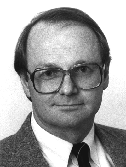 Michael G. Parsons, who chaired the department from 1981 to 1991 and then served as Associate Dean for Undergraduate Education until 1996.
In October 1981, to commemorate the centennial of naval architecture and marine engineering at the University of Michigan, the department issued a report titled “Naval Architecture and Marine Engineering at the University of Michigan 1881-1981.” That report provided many of the facts recorded here.
Anastassios Perakis joined the faculty in 1982. Like Bernitsas, he was a native of Greece with a Ph.D. from MIT, but his interests were more in the line of systems analysis and ship production. He introduced several new courses including probability analysis in the design of ships and offshore structures.
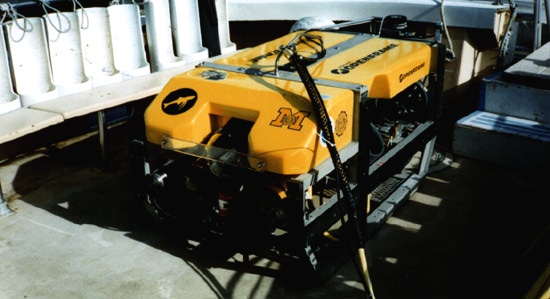
A landmark appointment was that of Guy Meadows, who in 1988 transferred to our department from the Department of Atmospheric, Oceanic and Space Sciences. Meadows is an outstanding and energetic oceanographer; his appointment underscored Parsons’ determination to establish ocean engineering as an integral component of our programs in education and research. Meadows has introduced courses in ocean engineering and also taken over leadership of CILER (Cooperative Institute for Limnology and Ecosystems Research). A hands-on scientist, Meadows has induced the University to equip him with a remote operated under water vehicle and a fleet of well-equipped small craft for offshore research.
Another outstanding scientist, Marc Perlin, joined the faculty in 1989. With a background in civil engineering and a Ph.D. in engineering mechanics (University of Florida), Perlin brought a wide knowledge of fluid dynamics, with unique perspectives on surface wave phenomena and other topics in coastal engineering. With good research contracts in hand, Perlin was soon able to oversee the construction of a unique wave tank, which allowed him to observe, measure, and record details of surface wave phenomena. That work continues, with impressive results.
Parsons brought in a second authority on wave action in 1989. This was David T. Walker, with a Ph.D. from Purdue University. With a solid reputation in wave mechanics, and equipped with outstanding facilities, Walker was able to attract a steady flow of research dollars. Among his more unusual activities was a study of the interaction between surface waves and ships’ wake, allowing detection of a ship’s course long after the ship had passed over the horizon. Walker started here as an assistant professor, but accepted an appointment as an associate research scientist in 1996, which position he still holds.
Toward the end of his chairmanship Parsons induced Dale G. Karr to resign his position as an associate professor of ocean engineering at MIT to accept a similar appointment here. Karr had worked several years in industry before earning a Ph.D. from the civil engineering department at Tulane University. He immediately took responsibility for several of our courses in ship structural analysis and introduced new material in energy methods and finite element analysis.
After ten outstanding years, Parsons resigned the chairmanship but accepted a five-year appointment as the College’s associate dean for undergraduate education, which position he held with distinction. During his term he managed a complete reformation of the Engineering curriculum. He concurrently provided effective leadership to the Michigan Sea Grant Program, with ties to several other schools around the State of Michigan.
Beck’s Achievements
Parsons turned the reins of the department over to Robert F. Beck in 1991. This was the start of a rather difficult period for the department. Enrollments were down and changes in the dean’s office abandoned the traditional relationship of guidance and support to one of more centralized control over the department. Nevertheless, Beck effected many improvements. He succeeded in attracting more female students; he led a successful drive to attract major research contracts; and he helped establish a strong new tradition: the Rosenblatt/Michigan Award to honor outstanding alumni. During Beck’s time in office our virtual reality lab came into being, we established a vigorous, coordinated industrial consortium in ocean engineering, and we took an active role in designing one of the America’s Cup boats, while our ocean engineering lab acquired M Rover , our remote-operated underwater vehicle.
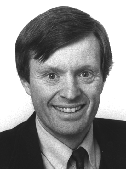 Working under less-than-ideal circumstances, Beck nevertheless achieved many remarkable improvements in our educational program and research efforts.
A versatile underwater vehicle, which enhances the capabilities of our ocean engineering team.
Under Beck’s leadership we introduced a new educational program aimed at strengthening our nation’s ability to build and operate ships in international competition. This was unique in that it approached ship design with full consideration of real-life economic conditions as well as shipbuilding technology.
Beck started our departmental newsletter, Nautilus , and by the end of his chairmanship in 1994 was gratified to see a healthy upward swing in both graduate and undergraduate enrollments.
Another controversy over terminology has dogged the department over a much longer period. Over the decades we have recurrently questioned the name of our department. For one thing, among the units in the College of Engineering, we always seemed to stand out as being both the smallest department and the one with the longest, most awkward name. Ogilvie proposed changing it to simply “Marine Engineering,” but this met with opposition from the alumni. Lacking faculty unanimity, Ogilvie let the matter rest. The question arose again during Beck’s chairmanship, and the faculty reached consensus on changing the name to Naval Architecture and Ocean Engineering. This, however, was vetoed by a member of the Board of Regents who thought the University should confine its activities to its own fresh water environment. Somewhat later Vorus argued in favor of reverting to Ogilvie’s proposal and changing our name to “Marine Engineering.” Once again, the members of the faculty agreed that our name was too long, but could not agree that “Marine Engineering” was the proper solution. There the matter rest, gently simmering on the back burner of departmental affairs.
Beck stepped aside from the chairmanship in 1994. Evidence of his effective leadership came the following fall when the ABET undergraduate accreditation review reported that “The program in naval architecture and marine engineering enjoys worldwide reputation as a leader in undergraduate education. The faculty, staff, students, and alumni continue to make significant positive accomplishments in the field.” It went on to characterize the department as “a national treasure that needs to be preserved and supported.”
Current Events Under Bernitsas
Michael Bernitsas succeeded Beck in leading the department. An energetic and imaginative leader, Bernitsas quickly organized a series of faculty retreats that produced a comprehensive five-year plan (following a recommendation of the 1994 department review). The plan established 10 goals, 30 strategic objectives, and no fewer than 72 action plans for 1994-1999 with the following mission:
“Our mission is to be a world leader in the education of naval architects and ocean engineers in the application of engineering principles in the marine environment by:
- providing the leading bachelor’s program in naval architecture and marine engineering, with emphasis on the design, manufacture, and use of marine vehicles, structures, and systems;
- providing a leading graduate education/research program which spans the full range of engineering for the marine environment;
- providing leadership and service to the national and international marine community.”
Believing in leading by consensus, Bernitsas is currently succeeding in guiding the department well along toward the achievement of the goals and objectives, among them: the establishment of the master of engineering degree in concurrent marine design; the modification of the undergraduate and graduate curricula; the issue of departmental annual reports; the establishment of the NAB (National Advisory Board Committee) in May 1996. In an effort to promote the department internationally, he has:
- Established international cooperation programs with premier sister departments around the world including Trondheim, Berlin, the University of São Paulo, Brazil, and Delft, Netherlands.
- Enhanced Visiting Professorship Program. The department acquires about 5 to 7 Visiting Faculty annually.
- Placed NA&ME faculty on international committes, editorial boards, etc.
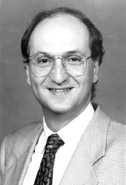 Noted for his vision, he has continued to lead us to new levels of excellence.
Yagle retired in 1994 and Kaldjian in 1995. The resulting gap has been partially filled by Thomas Lamb, a world-famous shipbuilding authority, who joined us in 1996 and has taken charge of our courses in ship production. Lamb’s time is shared with the UM Transportation Research Institute. Our faculty was further strengthened in 1997 with the recruitment of Nickolas Vlahopoulos, one of own graduates with seven years’ industrial experience in solving problems of noise and vibrations. He has since established an excellent reputation for his success as a teacher.
Bernitsas has enjoyed considerable success in every phase of his responsibilities. Since 1996, the Gourman Report has ranked our undergraduate curriculum the best in the nation. We strengthened our ties with the American Bureau of Shipping, which established three $10,000 annual scholarships, with offers of summer work and permanent employment. We were also encouraged by NAVSEA, which increased its summer internships; and the graduate program received a boost when the Coast Guard tripled the numbers of officers sent here for advanced education.
Departmental history was made in 1997 when we recruited our first female faculty member: Dr. Ana Sirviente, a native of Spain with a naval architecture degree from the University of Madrid and a Ph.D. from the University of Iowa. With a particular interest in hydrodynamics, she will teach a range of courses and continue her research in that subject.
A year after welcoming Sirviente, we added another female to our faculty: Dr. Tuba Özkan-Haller, a native of Turkey. Her undergraduate work was in civil engineering, and she earned a Ph.D. from the University of Delaware in coastal engineering. We are counting on her to strengthen our teaching and research in various phases of ocean engineering.
We reached another significant level of sophisticated technology in 1998, when we gave our students a completely modern setting, and advanced tools, for carrying out design projects. The traditional drawing tables, battens, and ducks were replaced by computer work stations encouraging teamwork in design. A wide range of computer programs are available to the students, allowing simulation-based approaches consistent with concurrent design initiatives.
Although worldwide shipbuilding is currently in a period of expansion, that prosperity is none too evident in the United States. Nevertheless, such is our reputation that we cannot begin to turn out enough graduates to meet the needs of industry. The typical senior can select from an average of five suitable job offers.
Looking Ahead
This brings to an end this summary of highlights of the history of the Department of Naval Architecture & Marine Engineering, a unit of the University of Michigan’s College of Engineering. What of the future? One may hope that the University and College will continue to lend support so that we may go on developing ever-strengthening programs of education and research in engineering for the marine environment. The details of what lies ahead are of course impossible to foretell with confidence. What we can say with assurance is that we have every intention of maintaining a faculty comprising versatile individuals highly qualified in the entire spectrum of our technology and adaptable to changing demands and opportunities. Given a reasonable degree of institutional support, we expect to continue indefinitely as one of our nation’s treasures that merits the University’s support and encouragement.